
Why Your Eaves Keep Rotting and How to Actually Fix It
The real causes of rotting fascia and sagging eaves on Newcastle homes, and why repainting or replacing the timber alone never solves it.
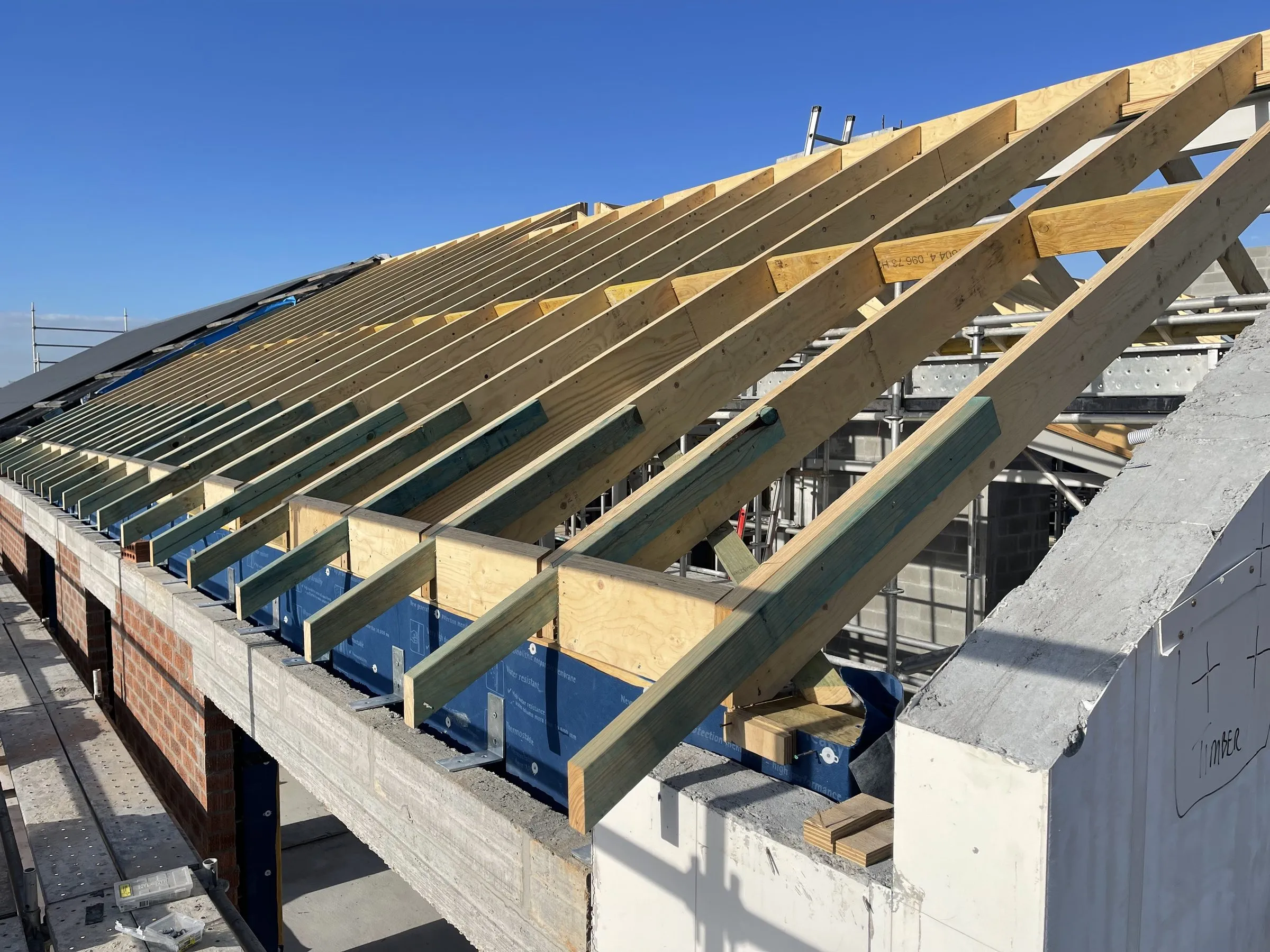
We get called to a lot of rotting eaves. In most cases the timber has been replaced before, sometimes twice, and it has rotted again. That is because nobody addressed why it was wet.
Rot is a symptom
Timber decay fungi need moisture content above roughly 20% to become active. Dry timber does not rot. It really is that simple.
So if your fascia is rotting, water is reaching it and staying there. Replacing the board without finding the water source gives you a new board that will rot on exactly the same schedule.
The usual culprits
Blocked or overflowing gutters. By far the most common. Gutters full of leaves overflow backward over the fascia rather than out the front. The fascia stays wet after every shower. Around Newcastle, with plenty of eucalypts, this happens fast.
Gutter installed without fall, or with reverse fall. Water pools rather than running to the downpipe, then overflows at the low point.
No or failed drip edge. Roofing must overhang into the gutter. If it stops short, water tracks back along the underside of the sheet or tile and onto the fascia. This is a very common defect.
Failed valley or flashing above. Water enters the roof and runs down inside, emerging at the eaves.
Downpipe issues. Blocked, disconnected or discharging against the wall.
No eaves ventilation. Warm moist air from inside the house rises into the roof cavity. Without ventilation it condenses on cold surfaces, and the eaves lining and fascia stay damp from the inside. This one is invisible from outside and catches people out.
Sprinklers. Irrigation hitting the eaves. It sounds trivial and we have found it more than once.
Diagnosing it properly
Look during rain. The most useful thing you can do. Watch where water actually goes. Overflow points and drips are obvious when it is raining and invisible when it is dry.
Check the gutter line. String a line or use a level. Look for sagging and ponding.
Check the roof overhang into the gutter. Should be roughly a third to halfway into the gutter.
Get into the roof space. Look for daylight, water staining on rafter ends, condensation on the underside of sarking, and whether there is any ventilation at all.
Probe the timber. A screwdriver tells you how far the decay extends. It is usually further than the paint suggests.
Fixing it properly
- Identify and rectify the water source. Always first.
- Clean and correct the gutters, including fall and downpipe capacity.
- Install or correct the drip edge so roof water discharges into the gutter.
- Add eaves ventilation if the roof cavity is unventilated.
- Cut out all decayed timber, back to sound material.
- Replace with primed timber, primer on all faces including cut ends, or use a fibre cement or metal fascia.
- Repaint properly, with attention to end grain and top edges.
Timber, fibre cement or metal
Timber fascia suits period homes and can be matched to existing profiles. Needs maintenance.
Fibre cement is stable and does not rot. Still needs painting.
Colorbond fascia and gutter is the low-maintenance option, and it is what most new homes use. It does not rot at all. It looks modern, so it may not suit an older house.
Cost
- Localised repair, a few metres: $800 to $2,500
- Full fascia and gutter replacement, average single storey: $6,000 to $14,000
- Adding eaves lining and ventilation: $3,000 to $8,000
- Two storey adds scaffolding, $3,000 to $8,000
The point
If someone quotes you to replace rotten fascia without going up to look at the gutters, the roof edge and the roof cavity, they are selling you the same repair again in five years.
We fix the cause first. We do fascia, eaves and gutter work across Newcastle and Lake Macquarie.
More building advice
Window Leaks: Why Flashing Fails and How to Fix It Properly
Why windows leak into walls, why sealant is never the answer, and what correct window flashing looks like in a Newcastle home.
External Cladding Types Compared for Newcastle Homes
Fibre cement, weatherboard, timber, composite and brick veneer compared on cost, maintenance and suitability for Newcastle and coastal Hunter conditions.
Recladding a House: What to Expect and What It Costs
The process of recladding a Newcastle home, what typically turns up behind old cladding, and realistic costs and timeframes.